For manufacturing businesses

See stock, production and delivery in one place in 90-180 days.

Stop relying on Excel sheets, phone calls and one person who has to chase every answer. Start with the part of the factory causing the most delay today.

Book your operational visibility assessment →

Three manufacturing stories

See the issue before it becomes a late order or stopped line.

Start with the problem that sounds most like your day-to-day work. These are representative ERPNext implementation scenarios, not claims about named customer engagements.

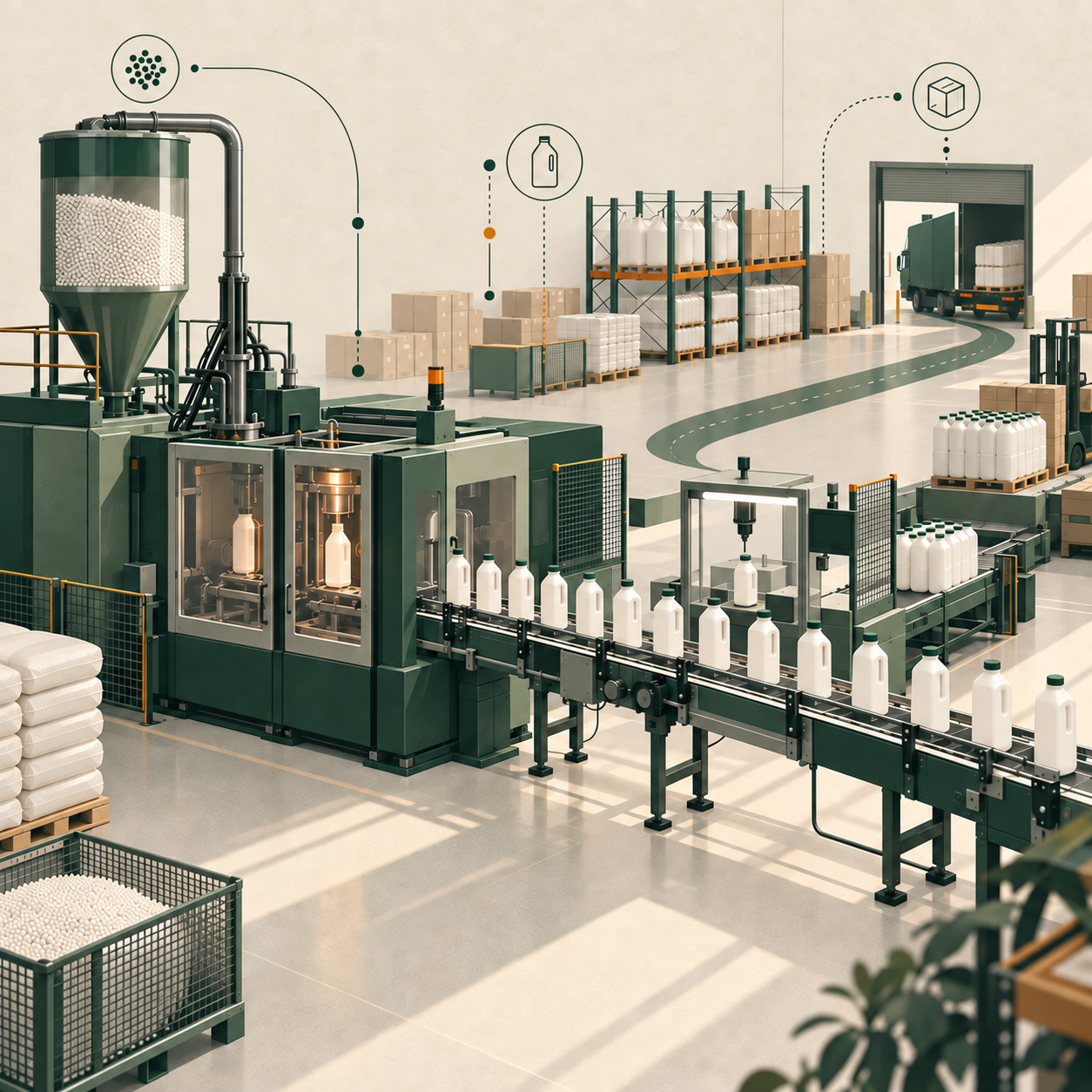
Packaging production line with connected operations CASE STUDY / 01
Production control view
Line 2 plan vs. actual82%
Critical resin1.5 days
Available finished stockLive

From separate departmental files to one operating view.

Repetitive & packaging manufacturing

Know tomorrow's production plan before the line stops.

Representative packaging manufacturer scenario

Production does not know what stores has. Sales does not know what production can promise. By the time the owner sees the numbers, the shift or delivery is already affected.

The reference setup puts sales, stores, production and accounts on the same page. The team can see what is short, what is running late and what to do next.

What changes day to day:
  • Reports that once needed manual compilation update from live transactions
  • Stock position is visible before customer commitments are made
  • Leaders can review the business from exceptions instead of chasing updates
Discuss packaging operations →
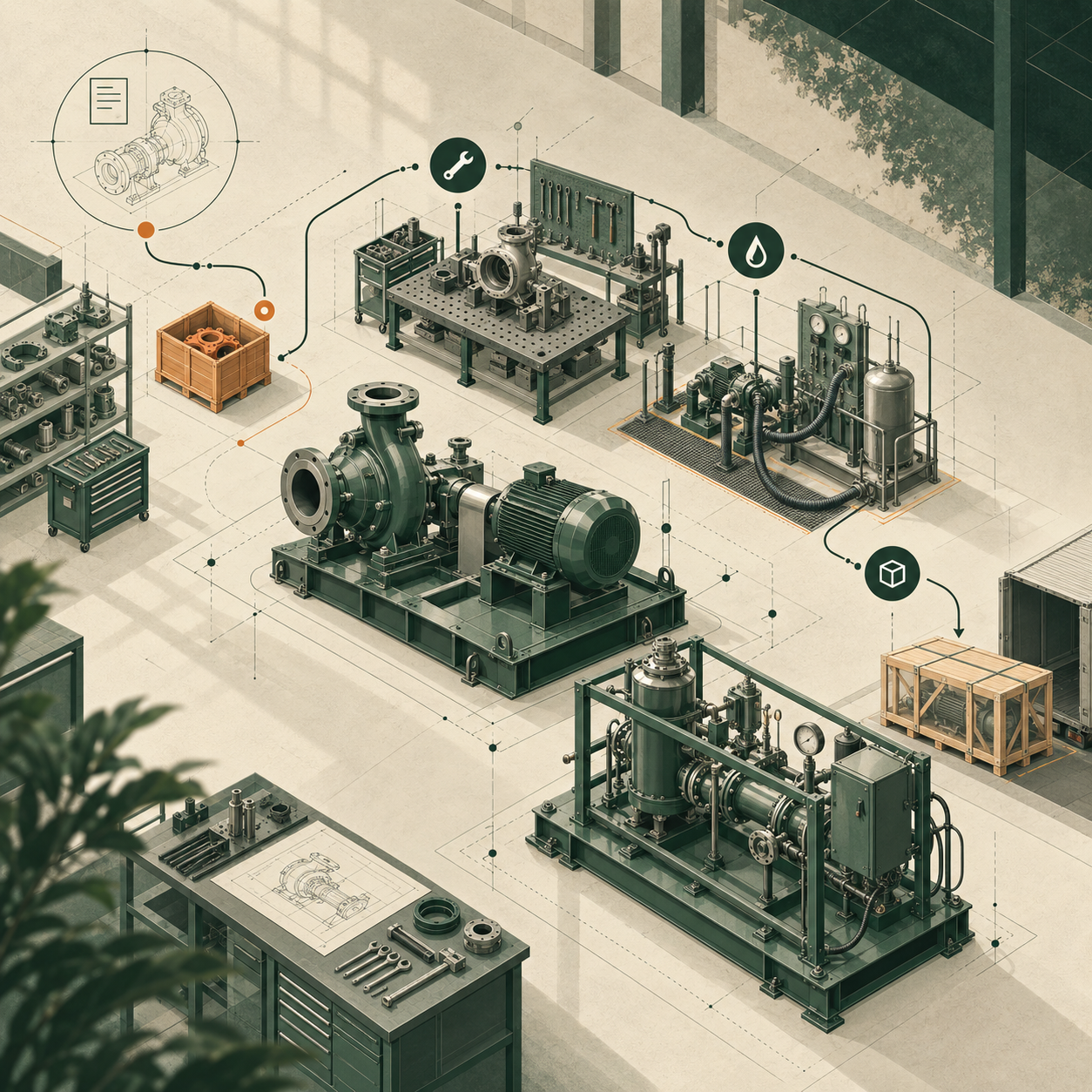
Industrial pump assembly with connected order dependencies CASE STUDY / 02
Order dependency view
SO-2026-0114At risk
Motor 15 kW2 short
Next actionExpedite PO

See why a promised date is at risk before the customer calls.

Make-to-order industrial manufacturing

Give customers a delivery date without five phone calls.

Representative industrial assembly scenario

For pumps, skids and custom assemblies, a delivery date depends on material, supplier delivery, work orders, testing and dispatch. Without one clear view, the answer is a chain of calls.

The reference setup shows what is missing, which supplier delay matters, what work is waiting and which customer order needs action now.

What changes day to day:
  • Customer commitments are linked to material and production dependencies
  • Shortages are seen in terms of the order they affect
  • Teams manage exceptions and actions, not a long list of reports
Discuss make-to-order operations →
Jewellery materials arranged for high-value inventory traceability CASE STUDY / 03
High-value material trace
Gold issued this week750 g
With job workers220 g
Wastage exception1 batch

Know where valuable material is - and what needs attention.

Jewellery manufacturing

Know where every gram is before it becomes a stock question.

Representative jewellery manufacturing scenario

Gold, stones and semi-finished goods move through stores, artisans, production and job work. When material is valuable, “approximately” is not good enough.

The reference setup follows material by weight, stage and customer order. It connects issue, return, wastage and approvals in one place.

What changes day to day:
  • Material issued to job work remains traceable until return
  • Wastage can be investigated by production order and stage
  • Purity-wise material position is available without waiting for a physical count
Discuss jewellery operations →
Ajay Kaaran Gupta, founder of Cimulink

Meet Ajay Kaaran Gupta

Why Cimulink starts with the work on your factory floor.

Clear information. Fewer follow-ups. Better day-to-day control.

I started Cimulink after seeing capable teams spend too much time moving information between people, spreadsheets and disconnected tools. As the business grows, the work gets harder to run.

My background is in building reliable systems and connecting the data people need to make daily decisions. I have 10+ years of experience building enterprise software and am an IIT alumnus. At Cimulink, we first understand how work moves from order to dispatch. Then we make it easier for the team to run.

The aim is simple: a stock number you can trust, routine work that does not wait for the owner, and a team that can act before a small gap becomes a costly delay.

Book your free strategy session →

How the IMPACT framework works

A 10-16 week path from daily follow-ups to one clear view.

We do not start by showing software. We start with the part of your day that is hardest to control, then fix it step by step.

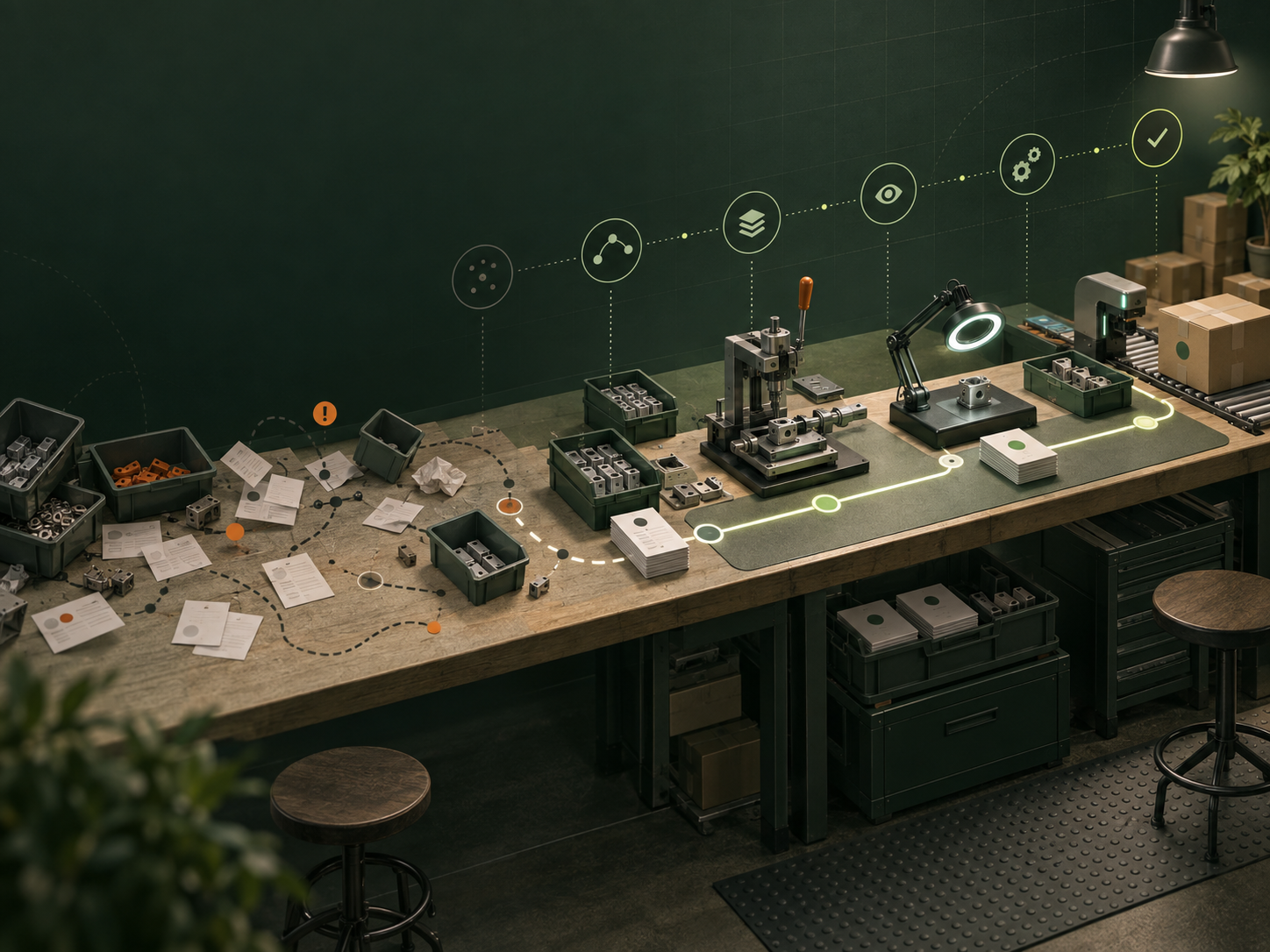
A visual flow from disconnected manufacturing work to a connected operating rhythm Book your free strategy session →
I

Identify what is going wrong

Find the delays, shortages, repeat follow-ups and stock mismatches that are costing the business most.

M

Map how work really moves

Follow the job from order to dispatch. Remove avoidable handoffs before adding any automation.

P

Put the right data in one place

Put sales, stores, purchase, production and accounts on the same numbers every day.

A

Act on exceptions before they grow

See late orders, shortages and pending decisions without waiting for an update meeting.

C

Control routine work without the owner

Route approvals, alerts and reports so every small decision does not come back to the owner.

T

Turn it into the daily routine

Train the team and keep reviewing what they use, so the new way of working stays useful after go-live.

Typical project: about 10-16 weeks, depending on process complexity, data readiness and scope. Several stages overlap in a practical rollout.

Why manufacturers choose us

Get answers before the next delay costs you.

The system should make the day easier to run. It should not become another checklist the team has to work around.

Book your strategy session →
01

Start with the problem, not the software

First find where stock, cash, time and approvals are getting stuck. Then choose the right fix.

02

Fit the system to your factory

Build around the way your team actually works, not a generic setup they will bypass next month.

03

Use numbers to take action today

Reports and alerts should show what needs action, not make the team spend the day collecting updates.

04

Keep control without approving everything

Routine work can go to the right person while the owner still sees the decisions that matter.

05

Stay close until the team is using it

We take on a limited number of projects so the work stays connected to the result, not just the go-live date.

06

Keep fixing what slows the team down

Review what the team uses after launch. The goal is a system that helps every day, not one that simply exists.

Schedule your free operational visibility strategy session

Find the one gap costing your team time this week.

Bring the problem causing the most phone calls, stock checks or delivery questions. We will map the first sensible next step.

Book your free operational visibility assessment →

The scenarios and improvement ranges on this page are illustrative. Actual outcomes, timing and scope depend on the business process, data, implementation choices and team adoption.