For manufacturing businesses

Build a factory that runs with less chasing.

Move toward a clearer operating rhythm in 90-180 days - without relying on scattered Excel sheets or becoming the person every decision waits for.

Book your operational visibility assessment

Three manufacturing stories

Start with the one problem you recognise.

Each scenario follows one operational question from uncertainty to a clearer next action. They are representative ERPNext implementation scenarios, not claims about named customer engagements.

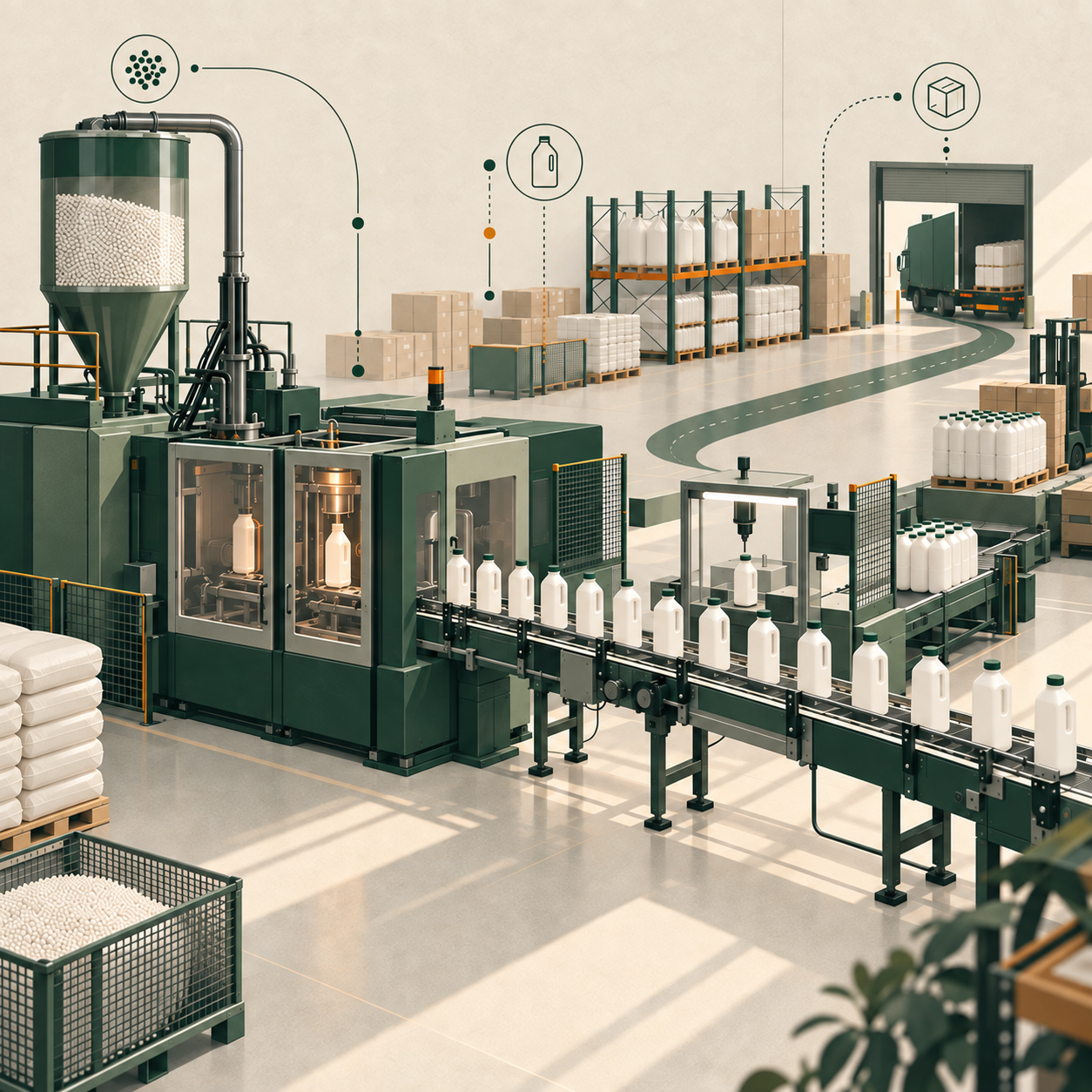
Packaging production line with connected operations CASE STUDY / 01
Production control view
Line 2 plan vs. actual82%
Critical resin1.5 days
Available finished stockLive

From separate departmental files to one operating view.

Repetitive & packaging manufacturing

From Excel sheets to a factory that runs on one system.

Representative packaging manufacturer scenario

Production cannot see what stores has. Sales cannot see what production can commit. Management receives a version of the numbers only after the moment to act has passed.

This reference implementation connects sales, production, inventory and accounts around the shop-floor workflow - so the system reflects the work instead of becoming another spreadsheet to maintain.

What the operating view is designed to change:
  • Reports that once needed manual compilation update from live transactions
  • Stock position is visible before customer commitments are made
  • Leaders can review the business from exceptions instead of chasing updates
Discuss packaging operations
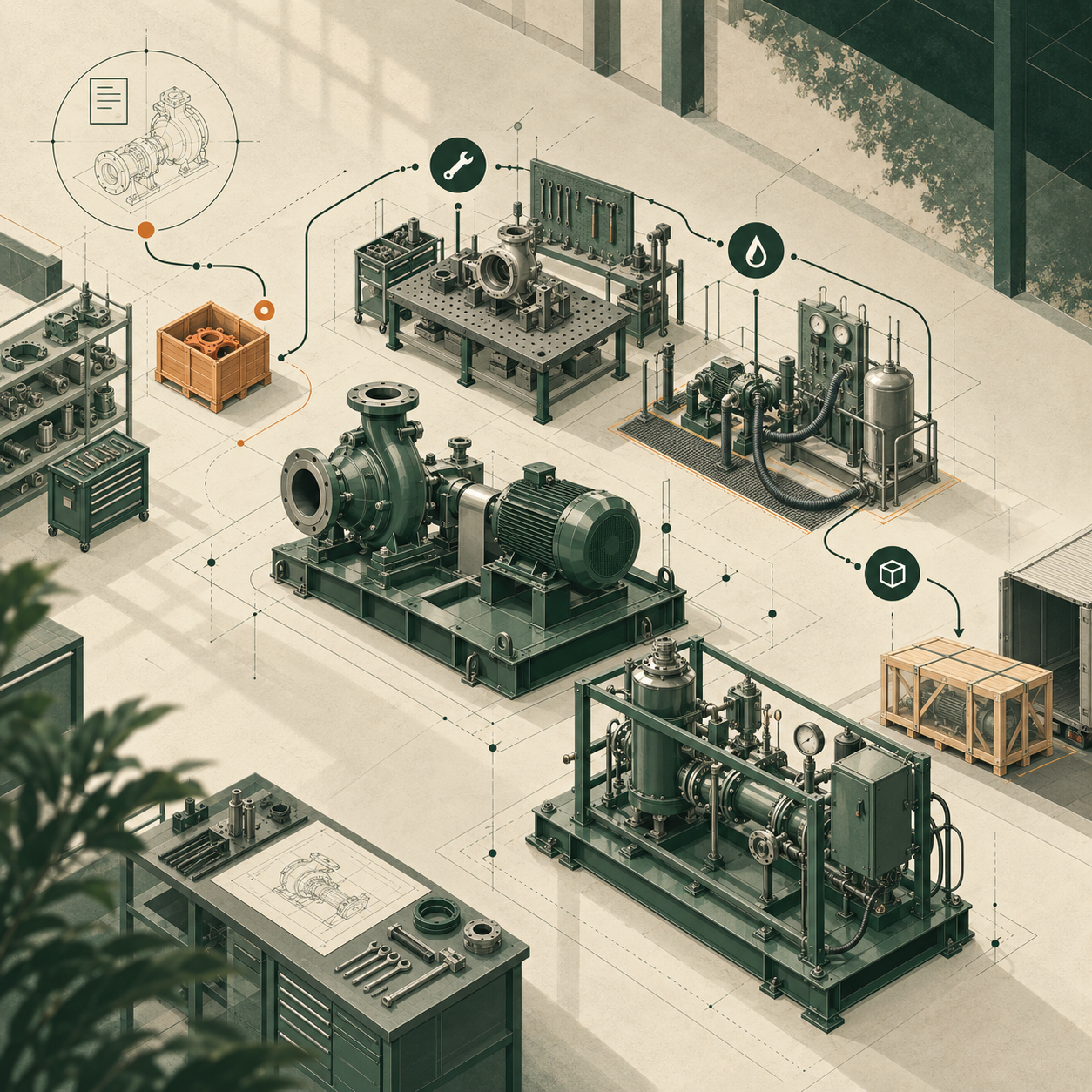
Industrial pump assembly with connected order dependencies CASE STUDY / 02
Order dependency view
SO-2026-0114At risk
Motor 15 kW2 short
Next actionExpedite PO

See why a promised date is at risk before the customer calls.

Make-to-order industrial manufacturing

From “let me check” to an answer the team can stand behind.

Representative industrial assembly scenario

For pumps, skids and custom assemblies, a delivery date depends on material, supplier promises, work orders, testing and dispatch. Without one connected picture, the answer is a chain of calls.

This reference implementation makes the dependency visible: what is missing, which supplier delay matters, what work is waiting, and which customer commitment needs attention.

What the operating view is designed to change:
  • Customer commitments are linked to material and production dependencies
  • Shortages are seen in terms of the order they affect
  • Teams manage exceptions and actions, not a long list of reports
Discuss make-to-order operations
Jewellery materials arranged for high-value inventory traceability CASE STUDY / 03
High-value material trace
Gold issued this week750 g
With job workers220 g
Wastage exception1 batch

Know where valuable material is - and what needs attention.

Jewellery manufacturing

High-value inventory without “approximately”.

Representative jewellery manufacturing scenario

Gold, stones and semi-finished goods move through stores, artisans, production and job work. When material is valuable, an unclear register or late wastage calculation is not a small administrative issue.

This reference implementation follows material by weight, stage and linked customer order - connecting issue, receipt, expected return, wastage and approval records.

What the operating view is designed to change:
  • Material issued to job work remains traceable until return
  • Wastage can be investigated by production order and stage
  • Purity-wise material position is available without waiting for a physical count
Discuss jewellery operations
Ajay Kaaran Gupta, founder of Cimulink

Meet Ajay Kaaran Gupta

Founder, Cimulink
Creator of the IMPACT framework

Building dependable systems for businesses that have outgrown guesswork.

I started Cimulink after seeing the same pattern in complex operations: capable teams end up spending too much time moving information between people, spreadsheets and disconnected tools. The work becomes harder to run as the business grows.

My background is in building reliable, high-performance systems and connecting the data behind day-to-day decisions. At Cimulink, that experience is applied in a practical way: understand the real workflow first, then use system integration and automation to make it easier for the team to run.

The goal is not a more impressive software stack. It is an operating picture you can trust, routine work that does not wait for the owner, and a team that can act before small gaps become expensive problems.

Book your free strategy session

How the IMPACT framework works

How the IMPACT framework works.

The stages are simple by design. Each one prepares the ground for the next, so the system does not get ahead of the process.

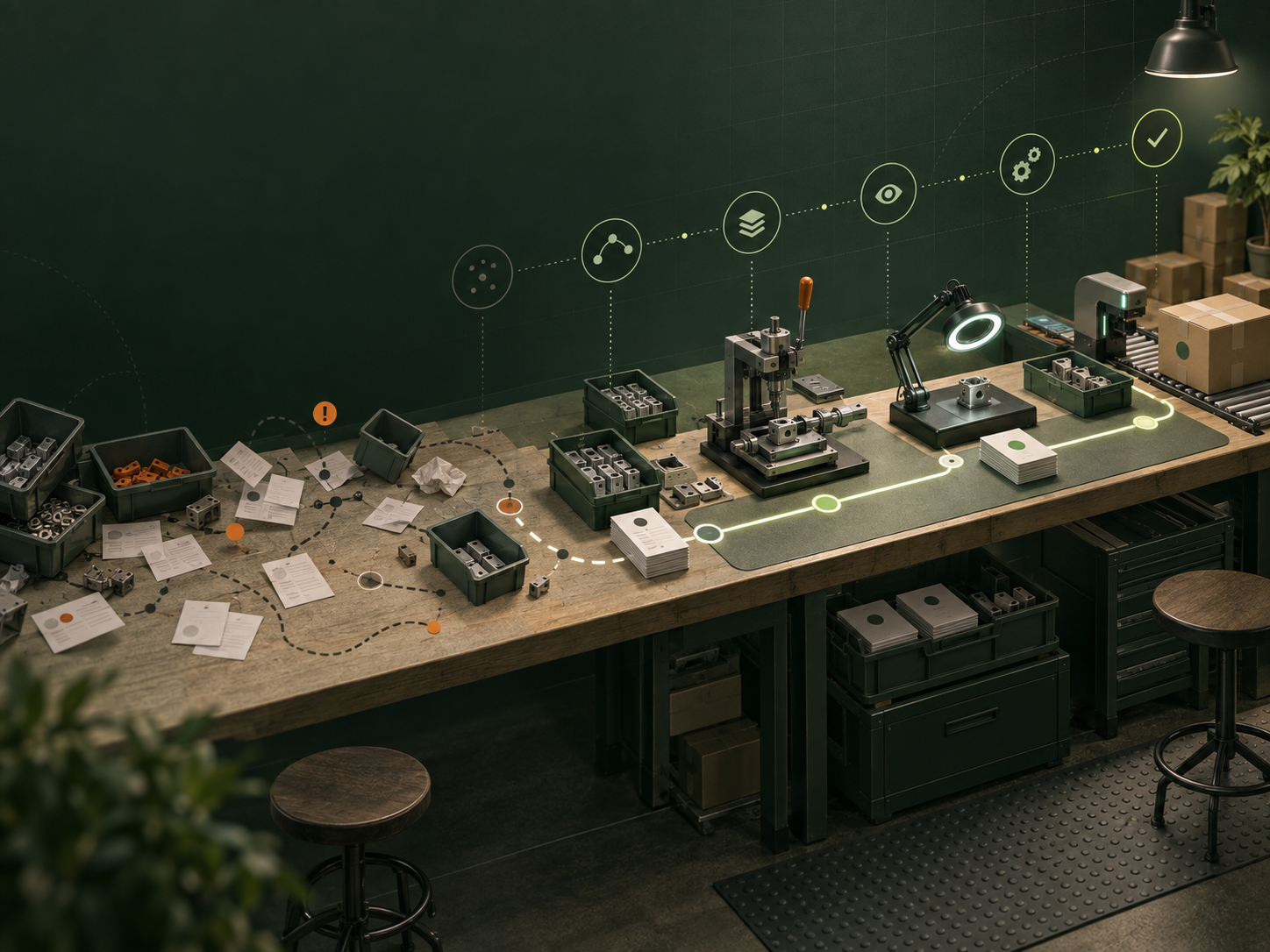
A visual flow from disconnected manufacturing work to a connected operating rhythm Book your free strategy session
I

Investigate operational leakages

Map where time, inventory, money and information are slipping through the cracks. Focus the work on the bottlenecks creating the most friction.

M

Map the real workflow

Simplify and standardise how work moves before automating it. The aim is fewer avoidable handoffs, delays and workarounds.

P

Put systems and data together

Connect the order, inventory, production, procurement, sales and finance flows that must agree for the operation to run clearly.

A

Activate operational visibility

Give leaders live signals on customer risk, shortages, exceptions and decisions that need their attention.

C

Control routine work

Set up approvals, alerts and reports so routine coordination reaches the right person without defaulting to the owner.

T

Transfer the operating rhythm

Train the team, review adoption and strengthen the daily habits that make the operating picture useful after go-live.

Typical project: about 10-16 weeks, depending on process complexity, data readiness and scope. Several stages overlap in a practical rollout.

Why manufacturers choose us

The system should fit the factory.

A useful implementation makes operating work clearer. It should not add a generic checklist that the team learns to work around.

Book your strategy session
01

Find the leak before choosing the tool

We start by finding where stock, cash, time and approvals are leaking, so the solution is built around a real operating problem.

02

Build around how your factory works

Workflows are designed around the production reality, not forced into generic presets that the team will bypass.

03

Turn data into a daily decision tool

Dashboards, approvals, reports and alerts should help the team act on information instead of spending the day collecting it.

04

Reduce owner dependency with the right controls

Control does not require the owner to approve or coordinate every routine transaction.

05

Stay close to the rollout

We take on a limited number of engagements so the work stays connected to the business outcome, not just the go-live date.

06

Keep improving after the first release

Adoption and visibility are reviewed after launch. The goal is a working operating rhythm, not a system that simply exists.

Schedule your free operational visibility strategy session

Start with the one question your factory should answer faster.

Bring the problem that is causing the most chasing today. We will map the first sensible next step together.

Book your free operational visibility assessment

The scenarios and improvement ranges on this page are illustrative. Actual outcomes, timing and scope depend on the business process, data, implementation choices and team adoption.